Planning
When Your Flight Lands Late at Night: How to Plan the Arrival
A late landing is not a sightseeing problem. It is three closing times, and whichever comes first decides the night.
The short answer
- After a late landing, the night is decided by three closing times: the last train from the airport, the hotel's front desk and the last kitchen still serving.
- Check all three before flying, because each runs on its own clock and none of them waits for a slow passport queue.
- As of September 2026, Rome's Leonardo Express leaves Fiumicino for the last time at 23:27 and Lisbon's metro closes at 01:00; reach the platform after either and the ride into town is a taxi.
- A late landing costs the next morning as well as the night, so the first full day should not start with a timed ticket at opening.
When a flight lands late at night, the plan for that night is not a choice of things to do. It is three closing times, looked up before the flight: when the last train leaves the airport, whether the hotel's front desk is still staffed, and where food is still being served. Whichever of those closes first sets the shape of the night.
A late landing here means a scheduled arrival after about 21:00, when the arrival hall has thinned out and the city's services have started shutting down for the day. This article is about planning that arrival on a short city trip. A flight that is delayed into the night is the same problem arriving without warning, and everything below applies to it too, only with less time to check.
The companion piece on planning around real flight times covers how many usable hours each end of a trip has. Its answer for a 22:15 landing is one word: sleep. That is correct, and it skips the part in between, which is how to get from the aircraft door to the bed without the night going wrong.
Three clocks close after a late landing, and the plan is whichever one closes first. The morning after pays for all of them.
What closes first after a late landing?
Usually the train. Airport rail links are the most useful thing at an airport and the first to stop, and the time printed on the timetable is a departure from the platform, not a landing time. Passport control, baggage and the walk to the station sit between the two, and on a late international arrival that gap can be most of an hour.
The front desk comes next in most cities, and it is the one people forget to check. Large hotels staff reception through the night. Small guesthouses and serviced apartments often do not, and arriving at a locked door at 00:40 with no code is an entirely avoidable bad night.
Kitchens are the least predictable of the three, because closing times vary by country far more than by city. The reliable move is not to depend on any of them.
The three checks, done the week before flying:
- The last departure from the airport station, on the actual day of the week. Night and weekend timetables differ, and a Sunday timetable caught on a Friday is how people end up in a taxi queue at midnight.
- Whether reception is staffed at the arrival time. If not, ask how late check-in works: a key safe, a door code, a night porter. Get the answer in writing and keep it offline.
- What food exists between the aircraft and the room. The arrivals hall, a station kiosk, a late supermarket near the hotel. If the answer is nothing, buy food at the departure airport.
How late the airport rail link runs in four cities
| City | Rail link into town | After it stops | Checked against |
|---|---|---|---|
| Rome | Leonardo Express to Termini, 32 minutes, every 15 minutes. Last departure from Fiumicino 23:27 | A taxi | Aeroporti di Roma and Trenitalia, September 2026 |
| Lisbon | Metro red line from Aeroporto. The whole network closes at 01:00, every day including weekends | A taxi | Metropolitano de Lisboa, September 2026 |
| Amsterdam | Train from Schiphol to Centraal | NS night trains run every night after the last regular train, roughly hourly | NS, September 2026 |
| Paris | RER B from Charles de Gaulle. The last train varies; check the day's timetable | Noctilien N140 and N143 to Gare de l'Est, running roughly 00:30 to 05:30 | Paris Aéroport, September 2026 |
The pattern matters more than any single row. Amsterdam is the forgiving case, because the trains never fully stop. Rome is the strict one: a 23:27 last train means a flight scheduled to land at 22:30 is already a gamble once passport control is counted. Paris has a gap, between the last RER B and the first night bus, and that gap is worth knowing about before standing on the platform in it.
Timetables change with seasons and engineering work, which is why every row above carries the operator and the month. Check again the week of the trip.
Should you book an airport hotel after a late arrival?
Only when the landing is past the last train and the airport is far from the city. Otherwise go into town, because an airport hotel turns the first morning of the trip into a transfer.
On a three-night trip that is an expensive trade. The first full day is the only one that can absorb a mistake, and starting it with a bag on a train at 09:00 spends its best hours on the thing that could have happened the night before. A taxi into the centre at midnight costs more than the last train, and it is almost always cheaper than losing the morning.
The exception is the very late landing into a distant airport, where the taxi is long and expensive and the alternative is arriving at a small hotel with no night staff. There, a bed near the terminal and the first train in is the sensible answer, and the next morning should be planned as a travel morning from the start.
What to tell the hotel before a late arrival
The scheduled landing time, the flight number, and a request for their late check-in procedure. Send it a few days before, not from the arrivals hall.
The flight number matters more than the time. A hotel that knows the flight can see a delay coming. A hotel that only knows 'late' has no way to tell a delayed guest from a no-show, and a booking that is not guaranteed can be released as one.
The late landing costs the next morning too
A 23:00 landing puts most people in bed after one. Nobody is at their best at eight the next morning, and an itinerary that ignores that has quietly assumed a person who slept well.
This matters because the best slots in a city are often the earliest ones. The 3 days in Tokyo guide sends people to Meiji Jingu at opening, when the gravel path is empty. The 3 days in Rome guide starts the Colosseum early, before the heat and the security queue. Both are right, and neither belongs on the morning after a midnight arrival. Swap that day with the next one, or push the timed ticket to the afternoon, and give the first morning to the neighbourhood around the hotel.
The 3 days in Lisbon guide makes the same point from the other direction: its oldest-hill day works because the climb happens once, first thing. On legs that got to bed at two, that climb is the wrong opener. It is a fine second day.
Which tools help with a late arrival?
For the night itself, the airline's app and the rail operator's timetable do more than any planner. They know about delays and cancellations as they happen, and that is the information the night runs on.
TripIt is the stronger tool for the travel day. As of September 2026, TripIt Pro lists flight status, alternate flights and baggage claim information among its paid features, and those are exactly the questions that come up between landing and the taxi rank. Owlio does none of that.
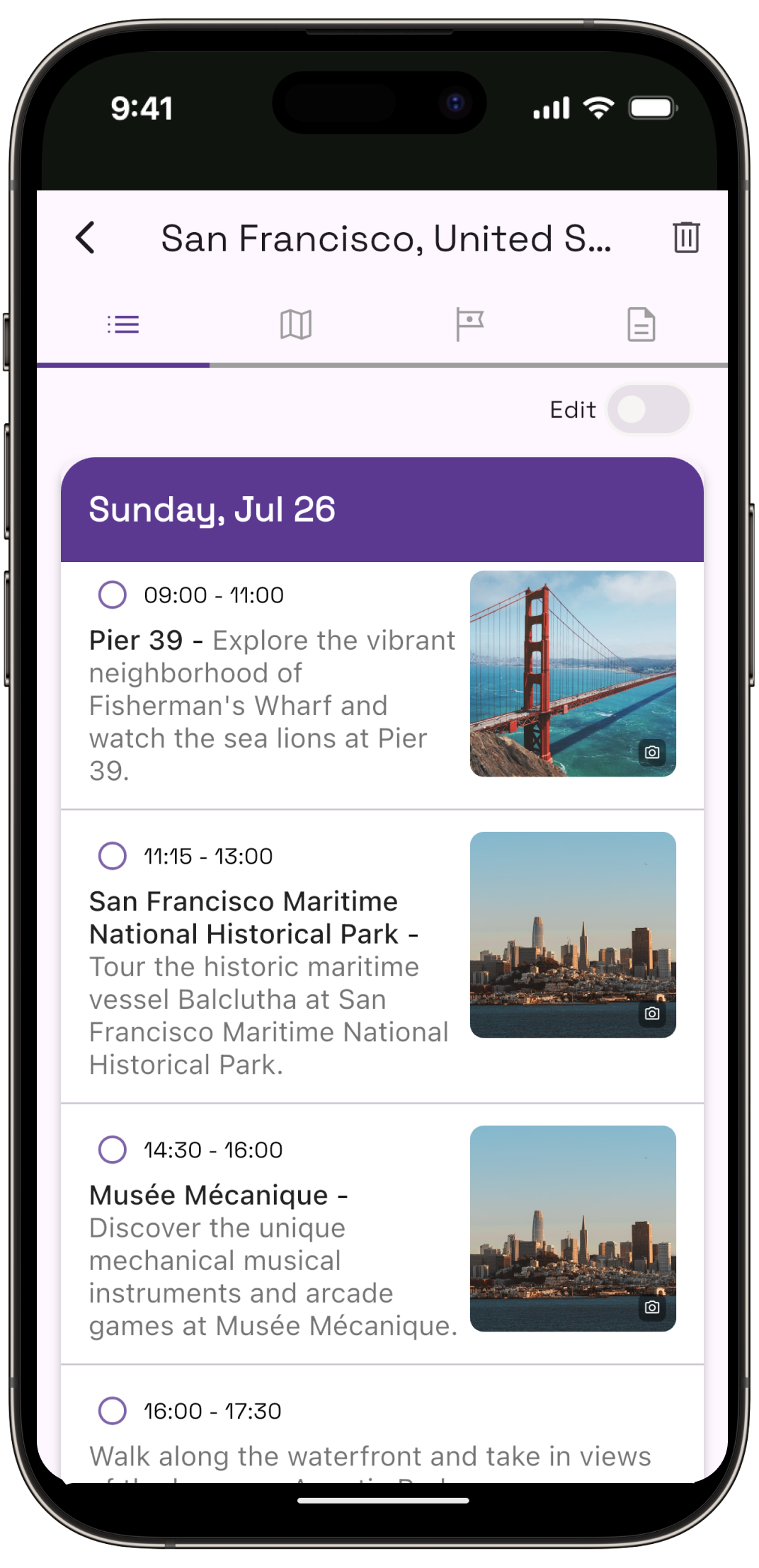
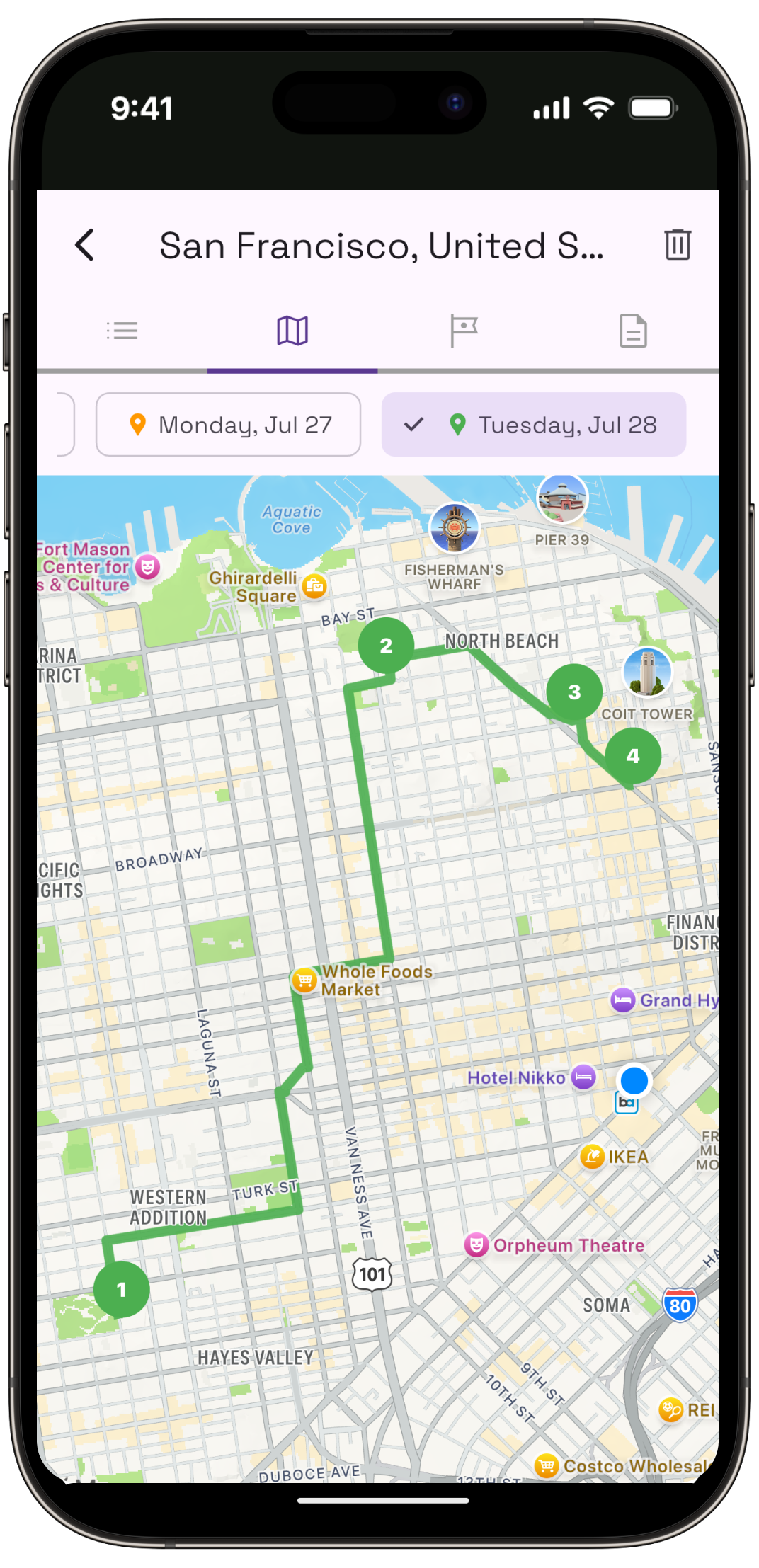
Where Owlio helps is the days after. It takes the arrival and departure times as inputs, so a late landing shapes the first day of the plan instead of being ignored by it. It will not tell you when the last train leaves Fiumicino. That number belongs to the operator, and it is the one to check.
What planning a late arrival costs
Mostly money. The taxi instead of the train, the guaranteed booking instead of the flexible one, a sandwich bought at the departure gate at airport prices.
It also costs the idea of the dramatic first night. A late landing is the wrong time to walk across a city looking for somewhere still open. The arrival that goes well is the boring one: known train, known door code, food already in the bag, and a first morning with nothing booked in it.
Common questions
What should I do if my flight lands late at night?
Treat the night as logistics. Before flying, check the last train from the airport on that day of the week, confirm the hotel's late check-in procedure, and buy food at the departure airport. After landing, go straight to the hotel and keep the next morning free of anything timed.
How late does the train run from Rome Fiumicino airport?
As of September 2026, Aeroporti di Roma lists the last Leonardo Express from Fiumicino to Roma Termini at 23:27. The ride takes 32 minutes and trains run every 15 minutes. A flight landing much after 22:30 should plan on a taxi, because passport control and bags come first.
Should I book an airport hotel if I land after midnight?
Only if the airport is far from the city and the trains have stopped. For most short city trips, a taxi into town is better value, because an airport hotel turns the first morning into a transfer and the first full day is the one that matters most.
What if the hotel reception is closed when I arrive?
Ask before travelling, not on arrival. Smaller hotels, guesthouses and apartments often have no night staff and use a key safe or door code instead. Send the flight number a few days ahead, get the late check-in instructions in writing, and save them where they open offline.
Where can I eat after landing late at night?
Do not rely on finding somewhere open. Kitchen closing times vary widely by country, and a late arrival leaves no margin to search. Buy food at the departure airport or in the arrivals hall, and check whether a supermarket near the hotel is open late.
Should I plan anything for the morning after a late arrival?
Nothing timed. A late landing usually means getting to bed after one, and an early booked slot the next morning is the first thing to go wrong. Move the at-opening sight to the second full day and spend the first morning around the hotel.
A plan that knows when you land
Enter the city and your real arrival and departure times. Owlio shapes the first day around a late landing instead of pretending it did not happen.