Planning
Museums Closed on Monday? Plan the Weekday, Not Just the Dates
A trip is booked in dates and lived in weekdays. The weekday is the one that decides whether the museum is open.
The short answer
- Monday is the most common weekly closing day for museums, and the most famous exceptions are exactly the museums people travel for.
- As of September 2026, the Louvre closes on Tuesdays, the Met Fifth Avenue on Wednesdays, and the Vatican Museums on Sundays except the last Sunday of each month.
- A three-night trip covers specific weekdays, so the day of the week it starts on can remove a headline museum from the trip entirely.
- Check each anchor sight's closing day against the trip's actual weekdays before deciding which day it goes on.
- Paris is the forgiving case: the Louvre and the Musée d'Orsay close on different days, so one of them is always open.
Most museums that close one day a week close on Monday. The Uffizi, the Musée d'Orsay and Vienna's Kunsthistorisches Museum all do. But the Louvre closes on Tuesday, the Met in New York on Wednesday, and the Vatican Museums on Sunday, which means the rule of thumb is wrong about precisely the museums a trip is usually built around.
A closing day here means the one day each week a museum does not open at all, as opposed to shorter hours or a late night. Holidays, strikes and one-off closures are a separate problem. This is the weekly pattern, the one that can be checked before booking and is still missed constantly.
It gets missed because trips are booked in dates. Friday the 10th to Monday the 13th reads as three nights. It is also a Friday, a Saturday, a Sunday and a Monday, and in Florence that Monday is the day the Uffizi is shut.
'Museums close on Monday' is right often enough to trust and wrong about exactly the museums people travel for. Check the weekday of every anchor, not the rule.
Which famous museums close on Monday?
In the cities this site covers: the Uffizi in Florence, the Musée d'Orsay in Paris and the Kunsthistorisches Museum in Vienna, each on its own published schedule. The Uffizi opens Tuesday to Sunday, 8:15 to 18:30. The Kunsthistorisches opens Tuesday to Sunday from 10:00, with Thursdays running until 21:00.
Monday is the default for a practical reason. Weekends are a museum's busiest days, so the quiet day after them becomes the one for cleaning, maintenance and the conservation work that cannot happen with visitors in the room. That logic is sound and widely shared, which is what makes the exceptions dangerous.
Which famous museums do not close on Monday?
The ones most likely to be the reason for the trip. The Louvre is closed on Tuesdays and is open on Monday. The Met Fifth Avenue closes on Wednesdays. The Vatican Museums open Monday to Saturday and close on Sundays, except for the last Sunday of each month, when entry is free from 9:00 to 14:00 with last admission at 12:30.
Palaces follow their own rules too. Seoul's Gyeongbokgung closes on Tuesdays, which is not the day most visitors assume, and a traveller who plans a Monday around the Korean palaces on the strength of a general rule can find the biggest one shut the next morning instead.
Weekly closing days, checked against each museum's own site
| Museum | Closed | Open late | Source, September 2026 |
|---|---|---|---|
| Louvre, Paris | Tuesday | Wednesday and Friday, to 21:00 | louvre.fr |
| Musée d'Orsay, Paris | Monday | Thursday, to 21:45 | musee-orsay.fr |
| Uffizi, Florence | Monday | No late opening listed | uffizi.it |
| Kunsthistorisches Museum, Vienna | Monday | Thursday, to 21:00 | khm.at |
| Vatican Museums, Rome | Sunday, except the last Sunday of the month (9:00 to 14:00, free) | No late opening listed | museivaticani.va |
| The Met Fifth Avenue, New York | Wednesday | Friday and Saturday, to 21:00 | metmuseum.org |
| Gyeongbokgung Palace, Seoul | Tuesday | Hours vary by season | VisitSeoul, Seoul's official tourism site |
The late openings belong in the same check. A museum closed on Tuesday and open until 21:00 on Wednesday has effectively moved part of a day, and on a short trip a late evening at the Louvre can be the easiest slot in the whole plan to protect.
Check the latest information for the museum you plan to visit. Closing days, late openings and holiday hours change, and the schedules above were checked in September 2026. Look again on the museum's official website in the week of the trip, not on a ticket reseller's copy, which is often out of date.
Why the weekday matters more than the date
Because a three-night trip covers only two full days, and the closing day of a headline museum can land on one of them. There is no third full day to move it to.
Take Florence. Arrive Thursday evening and leave Sunday, and the Uffizi is open on both full days. Arrive Sunday and leave Wednesday, and the first full day is a Monday with the Uffizi and the Palazzo Pitti both closed, which the 3 days in Florence guide handles by turning Monday into the built-in outdoor day. Same city, same three nights, a different trip.
The ends of the trip make this sharper. The flight-times post shows that arrival and departure days are fragments, which leaves two full days to hold everything that needs one. If one of those two is a closing day, the anchor has exactly one day it can go on.
Paris is the forgiving case
Paris's two great museums close on different days. The Louvre shuts on Tuesday, Orsay on Monday, so whichever day a trip loses, the other museum is open.
The 3 days in Paris guide calls this the useful half of a coincidence, and it is the model to look for in any city: when two anchors close on different weekdays, the plan can always swap them. When they close on the same day, as the Uffizi and the Pitti do in Florence, that day is simply gone.
How to plan a city trip around museum closing days
Write the weekdays down before anything else, then fit the anchors to them. It takes five minutes and it is the check most plans skip.
- Write the trip as weekdays. Not 10 to 13 October, but Friday evening, Saturday, Sunday, Monday morning. Mark which days are full and which are fragments.
- Look up the closing day of every anchor on its own website. Not a ticket reseller's summary. Resellers copy schedules and do not always update them, and a single stale line is enough to lose a day.
- Place the anchors on days they are open, with a margin. An anchor that can only go on one day has no room for a delayed flight or a sold-out slot, so book that one first.
- Give the closing day a job. A day when the museums are shut is a good day for the outdoor half of a city, a market, or a neighbourhood with nothing ticketed in it.
- Check the late nights. A late opening can rescue an anchor that has no daytime slot left, and it is usually quieter than the morning.
Markets and palaces have closing days too
The weekly rhythm is not only a museum problem. The city guides on this site flag the markets that keep their own calendars: La Boqueria in Barcelona shuts on Sundays, the Rialto fish market in Venice on Sundays and Mondays, and Bangkok's Chatuchak weekend market simply does not exist on a Tuesday.
The Istanbul guide covers the case where two anchors close on different days in the same city, with Topkapi and the Grand Bazaar each taking a different day out of the week. The principle is the same everywhere: the calendar decides the order before the map does.
Does a trip planner check closing days for you?
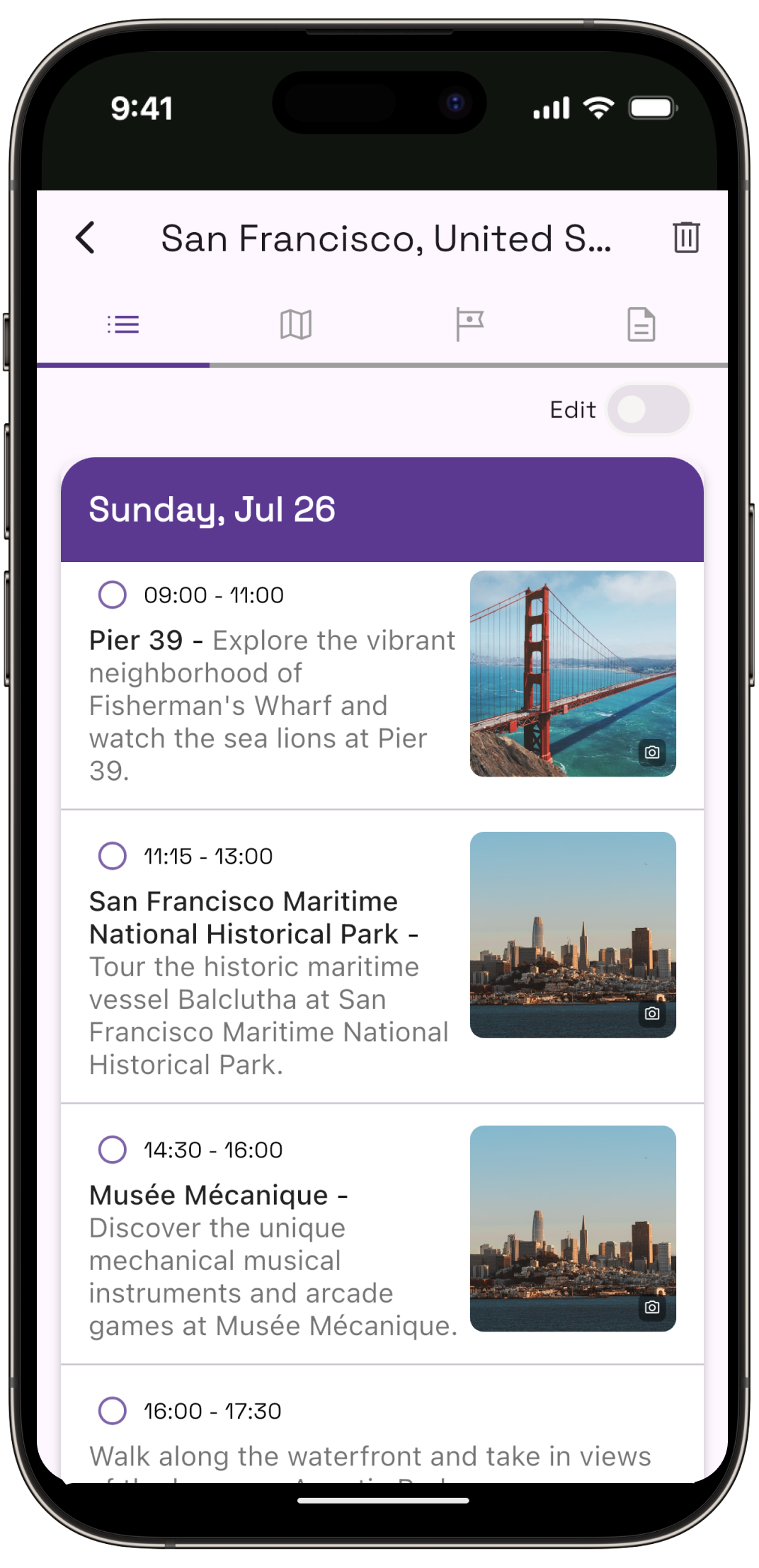
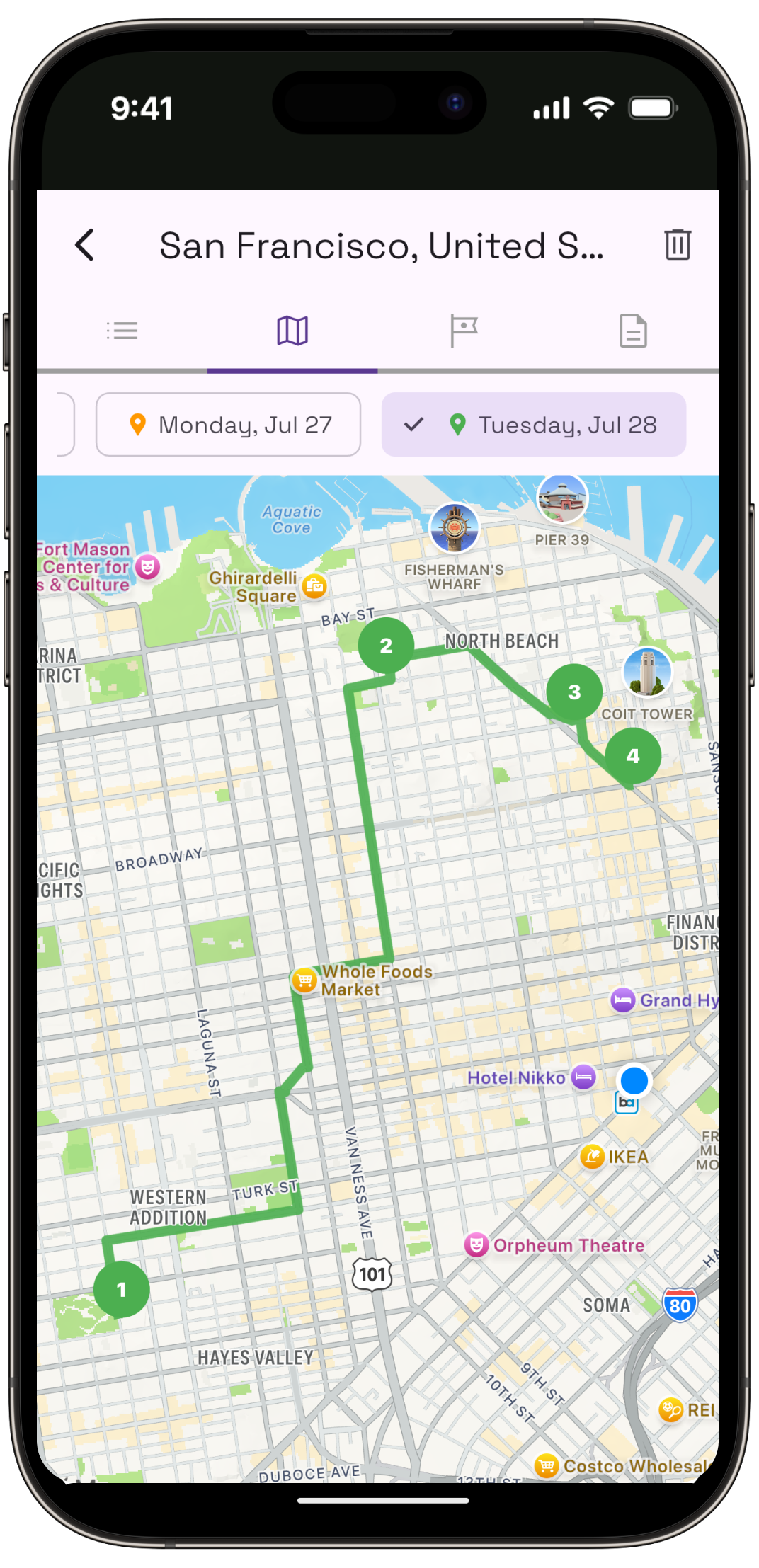
Not reliably, and it is better to assume it does not. Owlio plans around the real arrival and departure times and a pace, and groups each day's stops on a map. It does not advertise weekly-closing logic, so the anchor's closing day is still worth checking on the museum's own site.
Google Maps shows opening hours on each place, which catches a closed museum on the day. It does not warn that the sequence you built for Monday includes somewhere shut on Mondays. The Google Maps comparison covers that gap in more detail.
Where the weekly pattern breaks
On public holidays, which can close a museum that is normally open or open one that is normally shut. The Uffizi, for example, also closes on 1 January and 25 December, and Orsay on 1 May and 25 December. Check the specific date as well as the weekday for any trip that touches a holiday.
Also on one-off closures: strikes, special events, and in the Vatican's case papal occasions. None of these can be planned around a month out. The weekly closing day can, which is why it is the one worth getting right.
Common questions
Which museums are closed on Monday in Europe?
Monday is the most common closing day. The Uffizi in Florence, the Musée d'Orsay in Paris and the Kunsthistorisches Museum in Vienna all close on Mondays. The Louvre does not: it closes on Tuesdays, and is one of the most frequent exceptions travellers are caught out by.
Is the Louvre closed on Monday or Tuesday?
Tuesday. The Louvre's own site lists it as closed on Tuesdays and open on Monday, Thursday, Saturday and Sunday from 9:00 to 18:00, with late openings until 21:00 on Wednesday and Friday. The Musée d'Orsay closes on Monday, so one of the two is always open.
What day is the Met closed?
The Met Fifth Avenue is closed on Wednesdays. It opens from 10:00 to 17:00 on other days, with late hours until 21:00 on Friday and Saturday. Wednesday is an unusual closing day, which is why it catches out visitors who expect the Monday pattern common in European museums.
Are the Vatican Museums open on Sunday?
Only on the last Sunday of each month, when entry is free from 9:00 to 14:00 with last admission at 12:30. Every other Sunday they are closed. The museums open Monday to Saturday from 8:00 to 20:00, with last entry at 18:00, so Monday is a normal day there.
Why are so many museums closed on Mondays?
Weekends are the busiest days for most museums, so the quiet day after them is used for cleaning, maintenance, repairs and conservation checks that cannot happen with visitors present. Monday became the convention, which is why the museums that close on another day so often catch travellers out.
What should I do on a day when the museums are closed?
Use it for the parts of the city that do not keep museum hours: the outdoor sights, a neighbourhood walk, a market that is open that day, or a viewpoint. Plan it deliberately, since a closing day with no plan tends to end up spent looking for something that is open.
Two full days, each with the right anchor
Owlio builds each day around your real arrival and departure times. Check the closing days, and let it do the grouping and ordering.