Planning
Between Hotel Checkout and Your Flight: How to Plan the Last Day
Checkout is at eleven and the flight is in the evening. The hours between them belong to the trip only if the bags are somewhere other than on your back.
The short answer
- With an 11:00 checkout and a 19:00 flight, about four hours remain before it is time to leave for the airport, and a 23:30 flight leaves about nine.
- Luggage decides what those hours can hold: with the bags stored they fit one timed ticket and a meal, and with the bags carried they fit a walk and a chair.
- As of September 2026, NS lists a small locker at Amsterdam Centraal at €10 for the first day, paid at a screen beside the lockers and opened by scanning the printed receipt.
- Asking the hotel to hold the bags the evening before checkout costs nothing and removes the most common reason a last afternoon goes to waste.
- A departure before about 14:00 leaves no gap at all, and the last day should then be planned as a morning.
The gap between hotel checkout and the airport is a luggage problem before it is a time problem. Four hours with a suitcase is a wait in a café. Four hours without one is enough for a museum, a lunch and a walk back to the station, and the only difference between the two is a locker or a front desk.
Most advice on this stage of a trip lists things to do in the hours between. That is the easy half. The hard half is that a suitcase rules out most of the list, because ticketed sights, cloakroom queues and cobbled streets all treat a bag as a cost. Sort the bags first and the rest of the day becomes ordinary planning.
With the bags stored, the gap is an afternoon. With the bags carried, it is a wait. Plan the luggage first and the afternoon second.
How long is the gap between checkout and the airport?
Usually between four and nine hours on an evening flight, and none on a morning one. Work it out from the departure time: take away three hours at the airport, take away the ride out to it, and count from checkout.
The examples below assume an 11:00 checkout and a 45-minute ride to the airport. Change the second number for the city and the first for the hotel.
What the departure time leaves you
| Flight leaves | Leave the city by | Hours after 11:00 checkout |
|---|---|---|
| 13:05 | 09:20 | None. The gap ends before checkout |
| 19:00 | 15:15 | About 4 hours |
| 23:30 | 19:45 | About 9 hours |
A 13:05 flight and a 19:00 flight sit on the same date in a booking and are entirely different last days. The flight-times post covers the arithmetic for both ends of a trip. This post starts where that one stops, with the gap it leaves on the last day.
Where should the bags go?
Into the hotel's storage room if it has one, and into a station locker or a shop-based storage point if it does not. The order matters, because the hotel is free at many properties, sits next to where the day probably started, and needs nothing booked.
Policies differ from one hotel to the next. Some hold bags for free until evening, some charge per bag, some refuse after checkout. The cheap fix is to ask at the desk the evening before, not at 11:00 with a queue behind you.
The three usual options, with what each costs you:
- Hotel storage. Often free, and the bags are exactly where the day began. The catch is that the hotel is rarely on the way to the airport, so the last hour includes a detour to collect them.
- Station lockers. Placed on the route out, which is the point. Lockers are coin- or receipt-operated, can be full in summer, and vary a great deal in price, as the Amsterdam example below shows.
- Shop and café storage points. Apps such as Bounce and Stasher list local shops that hold a bag for a fee. Prices, insurance terms and opening hours change by city and by listing, so read the current one before booking.
What does a station locker actually cost?
It depends on the city, and the difference can be large. As of September 2026, NS, the Dutch railway, lists Amsterdam Centraal lockers at €10 for a small one on the first day, €16 for a large one and €25 for an XL. Payment is at a screen next to the lockers, the machine prints a receipt, and scanning that receipt opens the door.
NS also states a locker can be rented for up to three days, after which it may be emptied. That does not matter on a last afternoon, but it is a reminder to read the terms before leaving a bag somewhere you will not return to until the next trip.
For a single small bag, €10 is a reasonable price for four hours of freedom. For a couple with two large cases, it is €32 for the same four hours, and hotel storage or a shop point may well be cheaper. Check the current price on the operator's page, since these numbers move.
What fits in the gap once the bags are stored?
One timed thing, near where the bags are, and a proper meal. That is the entire capacity of a four-hour gap once the ride to the airport, the walk back to the station and a margin are taken out.
The ticketed sight goes first, because it has a fixed slot. The meal fills the space around it. Anything that needs a booking window, a long walk or a second train stays out of the day.
- Fix the leave-by time from the departure. Everything else counts backwards from it. In the table above, 15:15 is the hard edge of the 19:00 day.
- Choose the storage point near the last thing you will do. In Amsterdam, the 3 days in Amsterdam guide notes the Rijksmuseum is open 9am to 5pm daily, so a morning slot there and a locker at Centraal fits the gap on a 19:00 flight.
- Book the timed entry for the first hour after checkout, not the last. A late slot puts the museum and the leave-by time in direct conflict. An early one leaves the meal as the flexible part.
- Eat near the station. The final hour is the wrong time to find out that the restaurant you chose is a 25-minute walk from the platform.
- Collect the bags with a fifteen-minute margin. Lockers and shop points both have queues and closing times.
What if there is nowhere to store the bags?
Then the gap is a low-effort stretch, and the plan should be built that way. A carried bag rules out timed entry, museum cloakrooms and any street that is steep or crowded. It leaves a long lunch, a market, a park, a neighbourhood walk on flat ground.
That is not a failure. Flat, unticketed and sit-down is a sensible shape for the last afternoon of a trip anyway, and a café with space for a case is a better place to spend an hour than a queue. What to avoid is the middle path: a ticket booked for a museum that refuses large bags at the door.
When is the last day not worth planning?
When the flight leaves before about 14:00. Add three hours at the airport and the ride out to it, and the departure day is over before or at checkout.
For those trips, the last full day is the day before, and it deserves the good plan. The last morning gets a breakfast and a walk within a few minutes of the hotel, or nothing. Planning a sightseeing morning that ends with a sprint to the airport is how a trip finishes badly.
Where does Owlio fit, and where does it not?
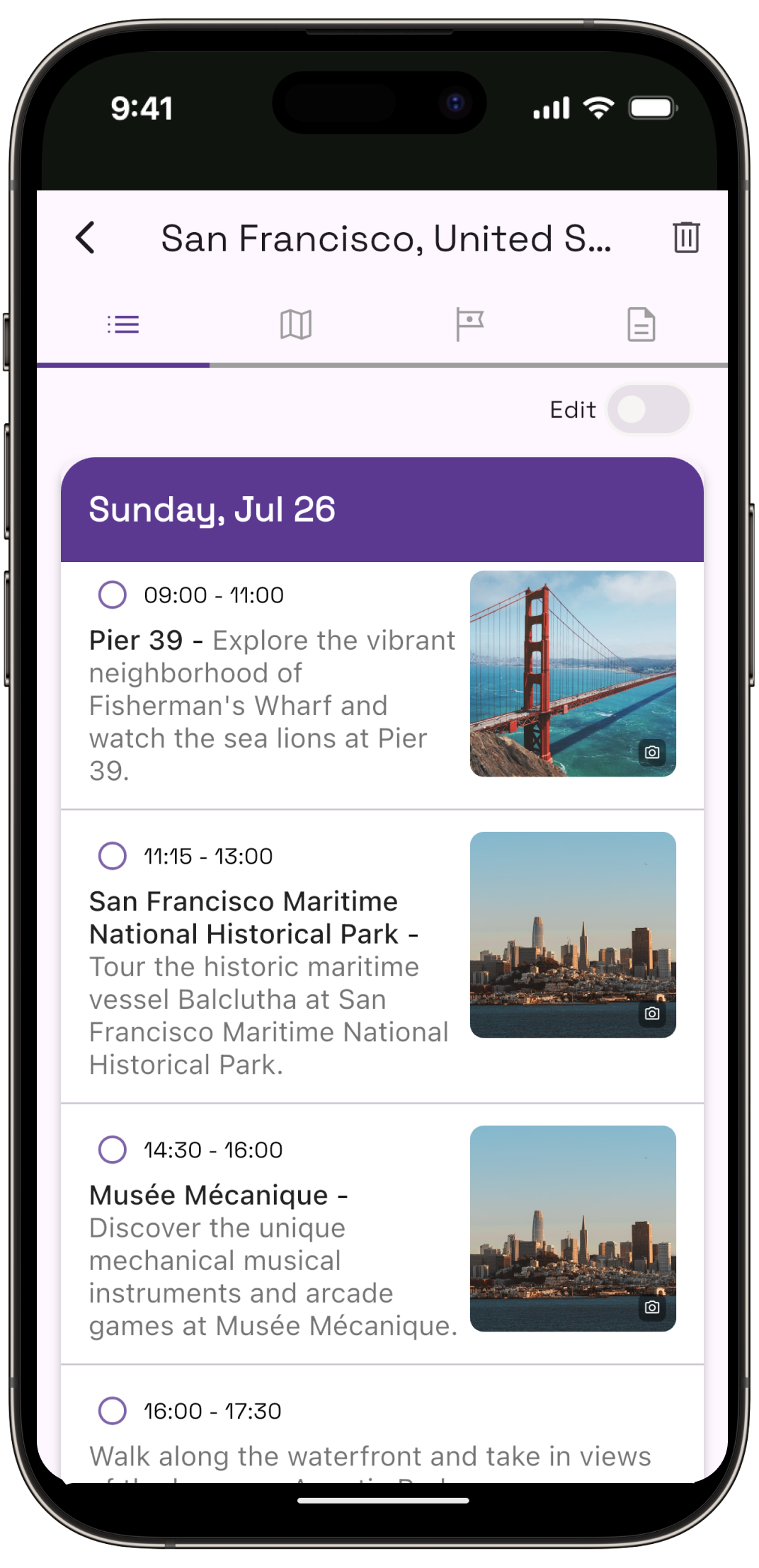
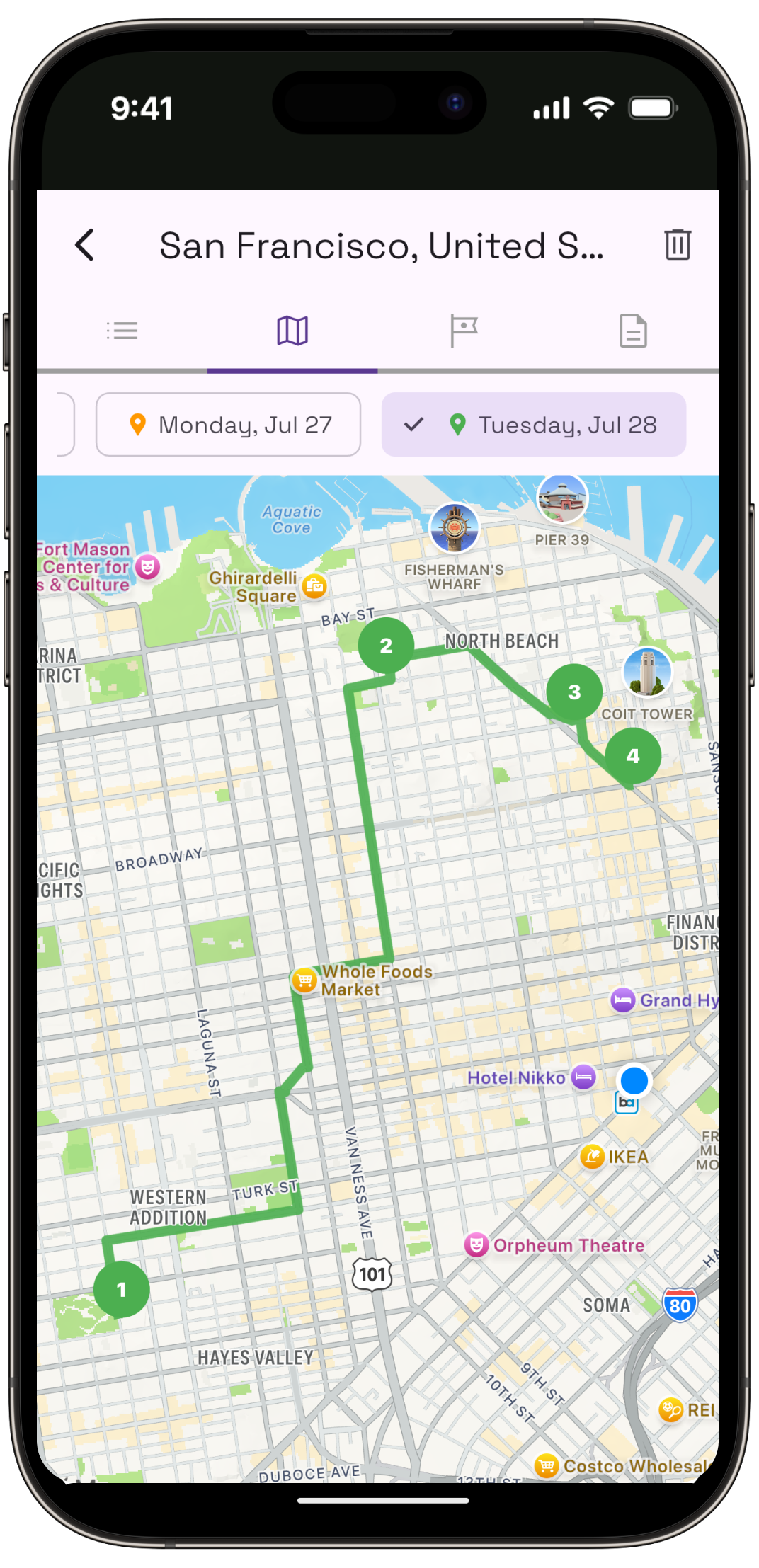
Owlio helps with the sizing. Give it the city, the departure time and a pace, and the last day comes back shorter or longer to match the hours that actually exist, instead of arriving as a full day the flight has already taken.
It does not find or book luggage storage, it does not know whether a locker is full, and it has no live transit, so the leave-by time and the storage point are yours to settle. For a trip built on a single city, that division of labour is workable. For anything that depends on live train times, the operator's own app is the better tool.
Common questions
What can you do between hotel checkout and a late flight?
Store the bags first, then fit in one timed ticket and a proper meal. With an 11:00 checkout and a 19:00 flight, roughly four hours remain before leaving for the airport, which is enough for a museum, lunch and an unhurried walk back to the station.
Will a hotel hold your luggage after checkout?
Many do, some for free and some for a fee, and some refuse. Policies vary by property, so the safe move is to ask at the desk the evening before checkout. A yes settles the whole afternoon, and a no leaves time to choose a locker.
How much does a luggage locker cost at a train station?
It varies widely by city and locker size. As of September 2026, NS lists a small locker at Amsterdam Centraal at €10 for the first day and a large one at €16. Other operators charge differently, so check the current price on the station operator's page.
How early should you leave for the airport after a day in the city?
Plan to be at the airport about three hours before an international departure, then add the ride out to it. With a 45-minute ride, a 19:00 flight means leaving the city around 15:15. Use your own airline's advice and a real journey time for the route.
Is it worth booking a museum on the last day before a flight?
Only if the slot is early and the bags are stored. A morning entry after checkout leaves the meal as the flexible part. A late slot puts the museum in direct conflict with the leave-by time, and a carried suitcase can be refused at the door.
Size the last day to the flight
Give Owlio a city and your real arrival and departure times, and the first and last day come back sized to the hours they really have. The bags are still yours to sort.